




Background of the Initiative
In Sabae City, the “JK Section” (a civic collaboration promotion project), where local high school girls freely share their opinions and participate in town development, was launched in 2014. The local “JK” (joshi kousei, or high school girls) actively exchange ideas and, in cooperation with various citizens, organizations, local businesses, universities, and regional media, energetically carry out projects and activities to enjoy and improve their city.
In the field of civil engineering, there are challenges such as the perception of it being a male-dominated profession, the low number of female workers, and the persistent image of the “three Ks” (kitsui, kitanai, kiken – tough, dirty, and dangerous).
Details of the Initiative
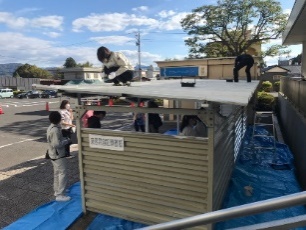
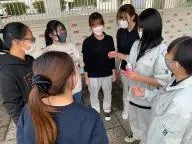
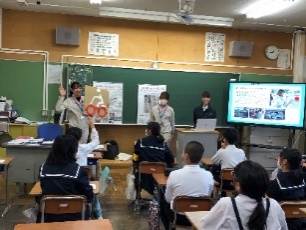
As part of the activities of the JK Section, the “Civil Engineering Girls PR Project” led by high school girls was implemented in FY2022 and FY2023. For example, local high school girls designed and wore stylish work uniforms they created themselves and painted the roof of a bicycle parking lot. In addition, graduates of the JK Section (the JKOG Section) and the local construction industry association visited elementary schools to give outreach classes. The group also shares updates on their activities through social media and newspaper coverage.
Results of the Initiative
Through hands-on experience at actual sites and interaction with active female engineers, participants have come to feel that “I might be able to do this” and “This looks fun,” contributing to an improved image of the civil engineering industry. Not only women, but also the younger generation as a whole, are showing increased interest in civil engineering work.