



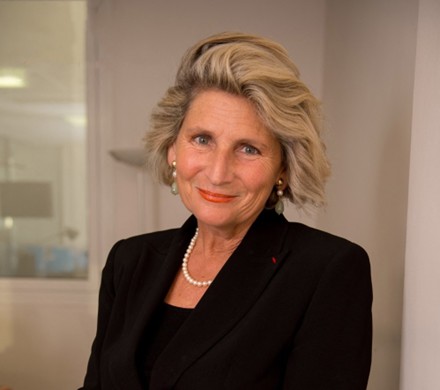
Self-introduction
I have worked in over 80 countries for approximately 47 years. Currently, I have been appointed as the French representative for the private sector to the G20 Business Women Leaders Taskforce “EMPOWER,” created during the 2019 Japanese G20 Presidency and I am engaged in acting with global companies and governments to foster progress and well balanced human-focused governance.
My career began as a journalist at the newspaper Il Globo in Italy. At that time, there were only two female journalists, and I was sometimes not allowed to cover war zones because I was considered “too young”, “too blonde” or “too nice.” However, these experiences strengthened my desire to create a society where everyone can play an active role fairly.
After moving to France for marriage, thanks to my language skills and my international competences and I was hired by the President of the Greater Paris Region to create Metropolis, the first worldwide association of great metropolis, and I established more than 20 bilateral economic agreements between Paris and other capital regions. One particularly memorable experience was when I established the agreement between Tokyo and Paris. Despite spending over a year negotiating and preparing the agreement, I was told not to speak at the official dinner, and at the end, the only thing I was asked was, “Did you see the baby panda at Ueno Zoo?” I regretted following instructions and not speaking about my contributions at the dinner. Since then, as I witnessed many talented women not being given the spotlight they deserve, I have become even more committed to promoting women’s empowerment.
Background in Addressing Gender Issues
What I have consistently felt is that “a society where women can participate fairly in decision-making benefits not only individuals but also society as a whole.”
Why do I think this? The first reason is the economic benefit. Women taking on high positions is not a zero-sum game that creates conflict between men and women. Rather, women’s contributions expand the overall pie for society. When both men and women are involved in decision-making and projects, a diverse range of ideas and experiences gather, leading to better solutions and the discovery of new, previously untapped needs. In fact, data shows that sufficient participation of women in economic activities could increase global GDP by 20%, which represents an addition of 28 trillion dollars. Thus, gender equality is also important from the perspective of “preventing economic loss,” and I believe that the lack of opportunities for female entrepreneurs and leaders is a significant social and economic waste.
The second reason is that there is much potential for leveraging the unique characteristics and abilities women possess, which differ from those of men, in various aspects of society. For example, I believe women tend to be more sensitive to “safety” and “comfort” compared to men. In France, RATP (Paris Transport Authority) allows bus passengers to get off at the requested location between bus stops after 10pm. Originally implemented from a female safety perspective, in practice, men also use this system as much as women, making it convenient for all users. Women also tend to have a long-term perspective and a greater focus on sustainability, which can be a plus in business management, leading to more realistic and sustainable decisions. The fact that these unique female perspectives and abilities are not being fully utilized is a major loss for society as a whole.
Based on these beliefs, I have focused my efforts on creating a favourable framework to enable women to play active roles in the economy and decision-making, such as the “Rixain Law” mandating female executive committees members and reforms to public procurement systems in Italy and France. Gender equality enhances societal benefits and is directly linked to economic growth and innovation across various fields. This is why I believe women’s empowerment is extremely important.
Current Projects
Currently, I am leading a movement called “Global Leadership by Women,” aiming to build a new governance structure where men and women can participate equally in decision-making, federating women’s networks and companies around the world. I am also focusing on increasing female participation in future-oriented fields such as AI, cybersecurity, and engineering, where male representation remains high. This is because organizations rich in diversity—where various values intersect—are more likely to succeed. In addition, I am promoting gender equality in public procurement, evaluating corporate diversity, visualizing female role models, and building networks through multifaceted activities.
Role within the Project: Global Leadership by Women Movement
I myself play a leading role in the overall project, including policy design, policy recommendations, planning and management of international conferences, and network building. I have been deeply involved in legislative reform processes in France and Italy and beyond, and have led the creation of systems to promote female appointments in collaboration with companies, governments, and international organizations. I am also working to build networks where women can support each other and to make role models more visible.
Project Results and Evaluation
Through the enactment of the “Cope-Zimmermann Law” and the “Rixain Law” in France and laws to increase the proportion of women in executive positions, the percentage of women on boards (46%) and in top management (28%) has steadily increased. Furthermore, reforms to public procurement systems and support for female entrepreneurs have expanded women’s economic opportunities. These achievements have also contributed to improvements in corporate governance, innovation, and social diversity. In addition, it has been confirmed that when women participate in negotiations and decision-making, more sustainable and effective policies and agreements are realized.
Future Outlook
I have launched the “Global Leadership by Women” movement and, in cooperation with women’s networks and companies worldwide, I aim to build a new governance system where men and women equally participate in decision-making. Men are also strong allies in this movement. To realize a sustainable, human-centered society, it is essential to embrace diverse perspectives, including women’s leadership.
I am convinced that women’s participation in decision-making in all fields—such as peacebuilding, infrastructure, and the economy—will lead to more realistic and sustainable solutions. For instance, when women are associated in peace negotiations, it has been proved that peace lasts 35% longer.
Message to Japan
Japan has a high level of education and well-developed legal systems for women, but what is important is a “culture of practice,” “role models who set precedents,” and “networks where women support each other.” I hope that women will believe in their own abilities, not let others define their roles, and be aware of their role as agents of social change, actively demonstrating leadership.