



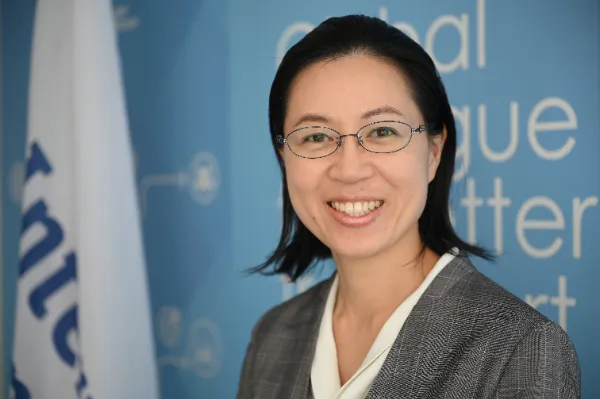
1. “Gender and Transport” Realized at the International Transport Forum
Since 2023, I have been working at the International Transport Forum (ITF) of the OECD. I first learned about the perspective of gender in the transport sector when I read an ITF report before my assignment. At that moment, various small discomforts I had experienced came together, and I remember thinking, “This is it!”
When I was raising children while both my husband and I worked in Tokyo, we tried to split housework and childcare equally. However, even then, there were subtle differences in how my husband and I traveled in our daily lives, and I sometimes felt that my male colleagues didn’t really understand this. Reading the ITF report, I felt that these issues were finally put into words for the first time.
2. “Small Discomforts” Felt in Everyday Life
Looking back, there were many times since childhood when I noticed differences caused by gender:
- Wondering why there was no toilet paper in station restrooms and why it was assumed women should bring their own
- Having to carefully plan travel times and routes for safety when traveling alone abroad
- Difficulty getting on buses or trams with a stroller, or crossing pedestrian bridges while raising children
- Not being able to sit close to my children in parks due to the lack of wide benches
- Only women’s restrooms having diaper-changing tables, meaning I had to wait in a long line and change diapers while my husband finished quickly and had time to spare
At the same time, I realized that I, too, unconsciously accepted gender roles: for example, in my family, my father always drove the regular car, while my mother drove the small car for errands or hospital visits—I never questioned this arrangement.
3. “Workplace Gender Issues” Seen During My Research Institute Days
In 2019, I was involved in surveys on women’s participation and work style reforms in the construction industry. Through interviews with companies and organizations, I learned about various efforts: improving women’s toilets and changing rooms at worksites, making tools and materials lighter, providing safety shoes in women’s sizes, and organizing site visits for female students to change the image that construction is “men’s work.”
There was also growing discussion about creating work environments not only for women with childcare responsibilities, but for anyone, regardless of gender, who might have caregiving duties. I encountered companies actively working on these issues.
From these experiences, I feel the challenges in the transport sector I face at ITF have the same underlying structure. While circumstances vary across countries and regions, there are many insights to be gained from overseas initiatives, and I am inspired daily.
4. Four Perspectives on Gender and Transport
At the “Gender and Transport” seminar hosted by the Ministry of Land, Infrastructure, Transport and Tourism (MLIT) in July 2024, I explained the relationship between transport and gender from the following four perspectives:
- Differences in Mobility Patterns: Women often handle housework, childcare, and caregiving, leading to more complex trips with multiple destinations.
- Safety and Security Issues: Women face many anxieties and inconveniences, such as the risk of sexual harassment on vehicles or streets, and difficulties due to differences in body size.
- Low Numbers of Women Working in the Transport Sector: Due to stereotypes that it’s “men’s work,” a lack of female role models, and issues with facilities and equipment for women, women’s needs are often not reflected in policy and planning.
Recently, I have come to consider another important point:
- Additional Challenges Faced by Women During Disasters: In addition to daily challenges, there are disaster-specific issues such as women’s needs being overlooked due to male-dominated management of evacuation centers, increased caregiving burdens, and limited mobility options.
Since transport is “derived demand for activities,” it is also essential to focus on the “place of activity” (primary demand) such as urban and land use planning. Changing only transport has its limits, and a comprehensive approach to community development is needed.
I am currently working to improve training content and communication so that MLIT staff can understand gender issues as their own.
5. It Starts with Noticing Small Discomforts
Some may wonder, “Why focus on women now, in this era of diversity?” When I was in high school, I thought, “Why do we still talk about men and women? I don’t want to have to write my gender.”
However, physical differences between men and women remain, and gender roles still influence individuals and society. That is why it is necessary to understand how behavior, needs, and policy impacts differ by gender, and to design systems that do not perpetuate disadvantage. Focusing on women, who make up half the population, can also serve as an opportunity to reconsider diversity as a whole, including men.
Moreover, because women have not been sufficiently involved in the design and operation of infrastructure and services, many systems do not take women’s needs into account. These inequalities are deeply embedded in daily life, making them hard to notice.
Everyone has probably experienced moments when women or caregivers feel “somehow inconvenienced.” For example, I once felt uncomfortable when someone’s long hair touched my face on a crowded train, but my tall male friend could not relate at all. That made me realize how hard it is to notice inconveniences that don’t affect oneself, such as those caused by height differences.
Therefore, it is important to pay attention to small discomforts around us or to someone else’s experiences. Just putting these feelings into words and sharing them with others can start to change our towns and society little by little. I encourage you to talk with someone about your experiences.