



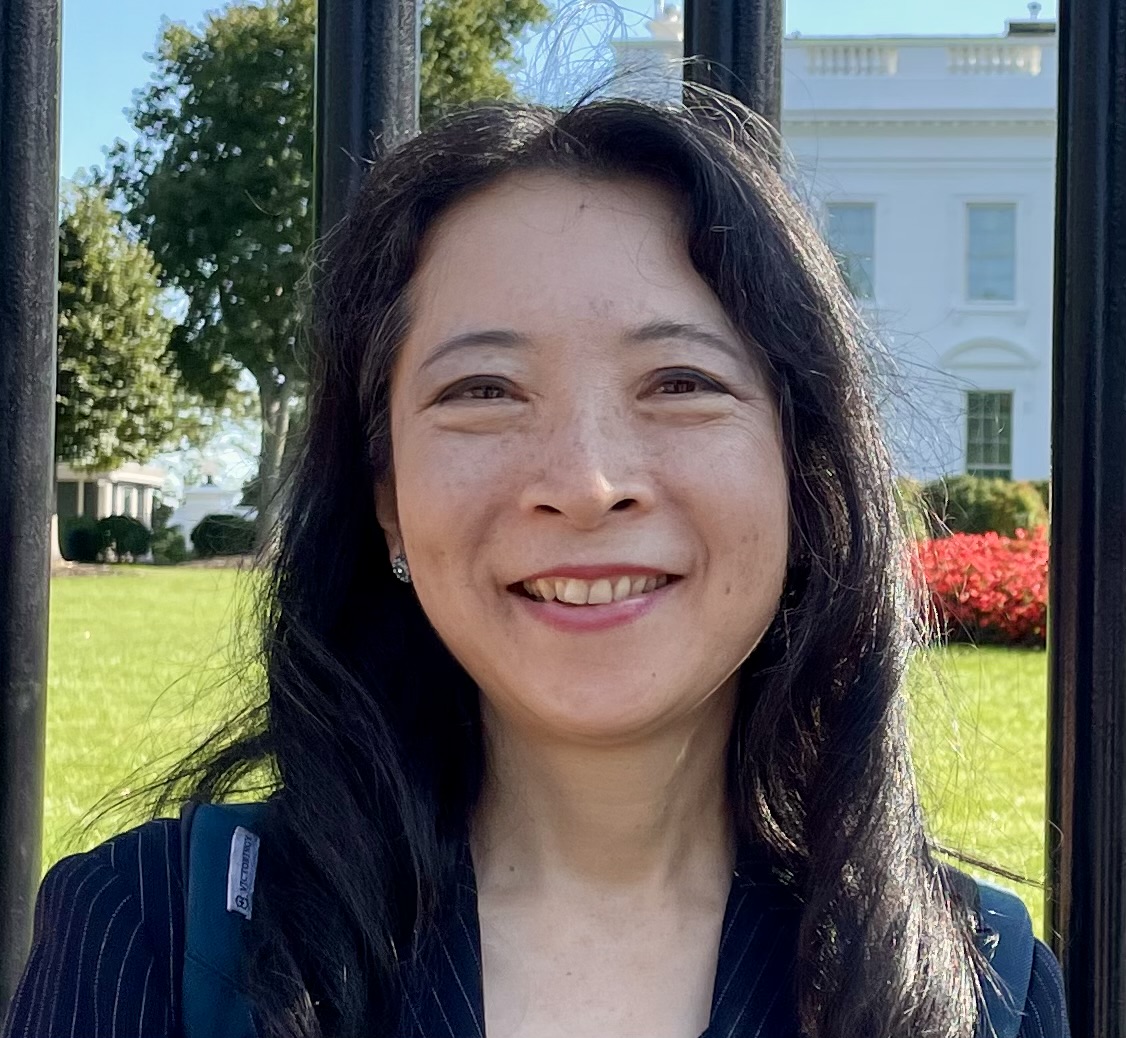
Self-introduction, background, and interest in transport and gender
I am a former Director-General for International Affairs at the Ministry of Land, Infrastructure, Transport and Tourism (MLIT). To be frank, I have very few memories from childhood of being told “because you’re a girl” or “because you’re a woman” and having my options restricted, so it’s only quite recently that I developed a strong awareness of gender issues. In the past, I partly believed that, within society, you could do what you wanted if you worked hard enough.
The turning point came in 2019–2020, when I researched “city-making from women’s perspectives” as part of regional revitalization work. As I looked into why women who leave rural areas for cities often don’t return, I learned about concrete policies that had taken shape—Vienna’s analysis of residents’ mobility patterns, its focus on the fact that men and women move differently, and the steps that led to wider sidewalks and better lighting; and innovations in housing complexes, such as colocating childcare and eldercare facilities, and designing layouts so that children playing in the courtyard are visible from the kitchen of every unit. I was astonished to see these ideas realized as specific policies.
I also encountered Jane Jacobs’ arguments—for example, that cities thrive when diverse people use them at different times and for different purposes—and I came to feel that what matters is not a single viewpoint, but incorporating different perspectives into policy itself. Around this time I also learned about the concept of gender mainstreaming, and realized it’s not about “I’m not personally inconvenienced, so it’s unnecessary.”
The next catalyst was my tenure as Director of the Tohoku Transport Bureau. At the suggestion of the Yamagata Prefecture Automobile Maintenance Promotion Association, we held a discussion with female auto mechanics. Hearing that when users are diverse, the providers of services shouldn’t be homogenous; and that female customers often feel reassured and specifically request female mechanics, I strongly felt that the current scarcity of women in the transport and mobility field is a loss for society.
Later, as Director-General for International Affairs engaged in international conferences, I was struck by how gender is routinely discussed across all fields, not just transport. The more I learned—about data revealing differences in mobility patterns, and about the impacts of disasters and climate change on women—the more I felt a sense of urgency that Japan’s outbound messaging and domestic implementation might be insufficient. Encountering the book “Invisible Women” opened my eyes to the scale of biases made visible by data.
Projects undertaken to date
- Promoting gender mainstreaming within and beyond MLIT: Starting in autumn 2023, I began raising the issue inside the ministry and accelerated concrete actions through 2024 while bringing stakeholders on board. In particular, in collaboration with the International Transport Forum (ITF), we co-hosted a symposium in July 2024 to create a kickoff forum for “getting people to know” about gender mainstreaming.
- Outreach on International Women’s Day: In March 2025, I spoke on an ITF webinar, sharing Japanese cases with overseas audiences, bringing international insights into Japan, and also broadcasting our experiences abroad.
- Engagement with companies: I have prioritized involvement not only with government but also with the private sector, to help companies recognize and adopt gender mainstreaming.
Role within the project
In my role at the time as Director-General for International Affairs, I served as a bridge between international discussions and domestic policy. I focused on conveying insights gained at international meetings in ways that could be translated into domestic policies and practice, creating conditions that enabled stakeholders to act.
During the promotion process, I had opportunities to speak with MLIT’s senior leadership, who encouraged me by saying, “If you think it’s important, go ahead and push it forward.” I myself hadn’t expected efforts to progress internally with such speed, so I was both surprised and grateful that leaders, each from their respective positions, came to understand the issues.
At the same time, there are challenges. We are still in the process of establishing ways to explain, in terms understandable to both adults and children, “What is gender mainstreaming?” and “Why is it necessary?” In the private sector and industry, there is often a stronger inclination toward “diversity rather than gender” (in reality, it’s not either-or; I believe it’s “gender and diversity”), and the terminology itself can invite misunderstanding. Designing how we communicate this is a major task going forward.
Project outcomes and evaluation
Despite the short preparation time, the ITF co-hosted symposium in July 2024 became an entry point for audiences inside and outside the ministry to realize “there is this perspective.” We were still feeling our way, starting from “What is gender mainstreaming?” but MLIT set a course for moving forward, and the speed with which we brought things to fruition—while engaging private companies—was striking. I personally felt, “I’m glad we did it, and I’m glad we pulled it off.” For building initial understanding, ITF materials and presentations were extremely helpful as foundational resources.
It was also a major gain to connect, through occasions like International Women’s Day, with practitioners around the world working on this theme. I felt how many people globally are tackling it with passion as a life’s work, and that network has been empowering for me. In linking international discussions to domestic policy and practice, simply maintaining these points of contact has become an essential foundation.
Future outlook
Going forward, I want to systematize explanations that make gender gaps visible and clarify what changes when a gender perspective is incorporated. To that end, I will return to graduate school starting in April. Gender mainstreaming has become something of a life’s work for me, so if anyone is interested, I intend to keep going anywhere to meet people and talk.
Transport and community-building are areas in which everyone is involved every day. If MLIT advances its efforts and they take hold among local governments and industry, there is a possibility that an understanding that “this really matters” will spread across society as a whole. As a national role, it is essential to build mechanisms that, based on data and evidence, ensure that the voices of diverse stakeholders are reflected as part of due process.
In the realm of transport and community-building, there are many people overseas who have undertaken fascinating practical work. Beyond Jane Jacobs, I hope to keep delving into the work of those who have grappled with housing and urban issues, learning from knowledge that is still not widely known in Japan. One example is Vienna’s park design initiatives that involved girls. When we carry the bias that public facilities are provided equitably, differences in usage by gender can be misread as “girls don’t like playing outside.” If the truth is that facilities and services don’t fit girls’ needs and usage differs as a result, then it points us to the importance of understanding those needs. Through workshops that include teenage girls and women in their twenties, multiple cases have emerged where parks have been redesigned into spaces where diverse people gather. Carefully incorporating residents’ opinions can be expected to deepen connections between a wide range of people and their communities, and I believe this can also contribute to regional revitalization.
Furthermore, if we look at the “design” dimension of transport and community-building, I think efforts for gender equality are engaging and exciting. I am interested in city-making as a whole and personally enjoy architecture; for me, the starting point for engaging with gender was city-making. I would be delighted to share with many people the vision of exciting designs spreading as we incorporate gender perspectives.